
I found this sweet little book at a thrift store a year or two ago, and chanced to pick it up yesterday to browse. Wow, why hadn’t I picked it before?! It has a wealth of snippets and excerpts from famous people in history who visited America, retelling what they observed. Insight. Perspective. Adventure!
Read something from another time period, and it provides you with a window into a whole other world.
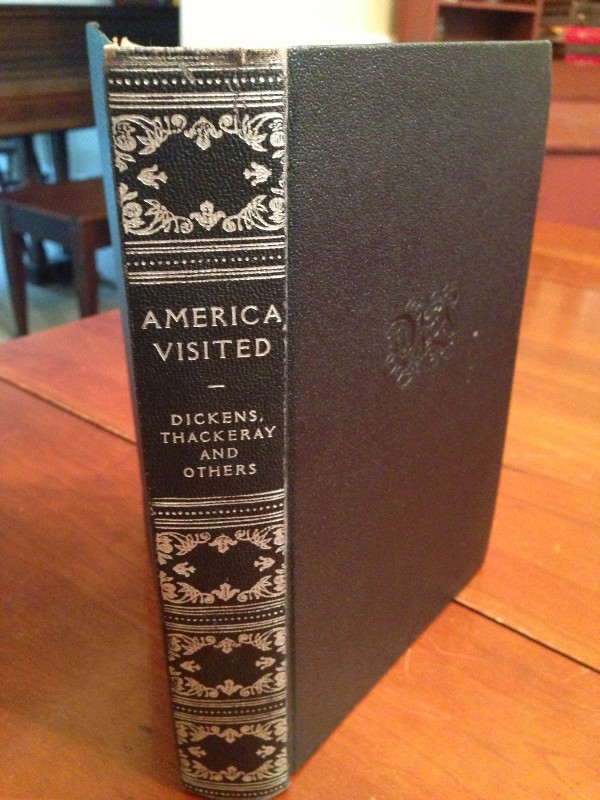
History, ah history… a glorious peek into a people and culture gone before us; instructional, interesting, with panoramic 20/20 hindsight that is often wrought with mistakes that we’re doomed to repeat if we don’t learn from it.
Quite honestly, it seems most of our modern culture now has little clue of history, let alone enough comprehensive knowledge to glean any wisdom to live by. We’re too busy watching the Kardashian’s weird lives, and The Housewives of God knows where who have nothing to offer us but… well, nothing. Today, this seemed good introspection for “our” birthday. I was riveted.
I began with Lafayette, the Frenchman who was only 18 years old when he first “learnt the troubles in America” as news of the 4th of July reached France. He was from an ancient family of French aristocrats; to prove that, his full name: Marie Jean Pau Roch Yves Gilbert Motier, Marquis de Lafayett (how’d you like to have to fit that baby name on a silver cup?).
Lafayette came to America to help fight when he was “scarely 19”, his privileged heart stirred with “my ardent love of liberty and glory” and he had to kind of secretly sneak around to make arrangements to come. He had a friend who became his interpreter (he didn’t speak English) who was “applying for service with the insurgents” in America as they were called at that time (did you know that!?).
God moved on the heart of a highly available man of means to help the rag-tag revolutionaries!
I just love to hear the stories of how things that made the Revolution in America actually possible (and won!) seem to be full of God appointed moments in history, unexplained in the natural. Lafayette said, “the secrecy with which this negotiation and my preparation were made appears almost a miracle; family, friends, ministers, French spies and English spies, all were kept completely in the dark as to my intentions.”
He gets to America on a large ship “when very bad tidings arrived from thence. New York, Long Island, White Plains, Fort Washington, and the Jerseys, had seen the American forces successively destroyed by 33,000 Englishmen or Germans. 3,000 Americans alone remained in arms, and these were closely pursued…”
He goes on that after that it was impossible to obtain a boat for them to get to shore and they tried to persuade him to abandon his project. It was just too dangerous. But he explains to his wife in a letter: “…after having sailed several days along a coast… swarmed with hostile vessels… every body said that my vessel must inevitably be taken, since 2 British frigates blockaded the harbor.”
But THEN (here comes God) “by a most wonderful good fortune, a gale obliged the frigates to stand out to sea for a short time. My vessel came in at noon-day, without meeting friend or foe.”
Yeah!
Coincidence? I don’t think so.
He explains how, in the course of this all taking place, how the world was looking on — watching, waiting to see what would happen. It was the topic of conversation in all of Europe, most thinking nothing could come of it.
England was THE force of the world at the time, as he put it: “after having crowned herself with laurels and enriched herself with conquests; after having become mistress of all seas; and after having insulted all nations, England turned her pride against her own colonies… The Americans, attached to the mother country, contented themselves at first with merely uttering complaints; they only accused the ministry, and the whole nation rose up against them; they were termed insolent and rebellious, and at length declared the enemies of their country: thus did the obstinacy of the king, the violence of the ministers, and the arrogance of the English nation OBLIGE THIRTEEN COLONIES TO RENDER THEMSELVES INDEPENDENT.”
YES!!
His explanation of why it was necessary is important for us to remember today, when we freely enjoy our incredible freedoms, at the sacrifice of thousands who literally laid down their “lives, their fortunes, and their sacred honor” to secure them for us. If we don’t remember and continue to carefully guard these freedoms we are on the road to losing them… over the National Archives Museum is posted, “The price of liberty is eternal vigilance”. Yes indeed. We have to be on CONSTANT watch.
Of the struggle, Lafayette wrote:
“Such a glorious cause had never before attracted the attention of mankind; it was the last struggle of Liberty; and, had she then been vanquished, neither hope nor asylum would have remained for her. The oppressors and oppressed were to receive a powerful lesson; the great work was to be accomplished, or the rights of humanity were to fall beneath its ruin…”
Sigh.
Marquis de Lafayette traveled around the world, as wealthy aristocrats were wont to do, trying to explain to all those he met at the highest level in every country what the struggle really was about and dispel myths about the government which was almost universally thought to fail. They’d never seen such a thing as America was trying to do before.
This (our) new form of government was literally an experiment… making a brand new constitution, granting equal power, liberty and opportunity to all it’s citizens (tragically of course, sans slavery — that massive blight on our history that we paid dearly for to correct). It was a huge risk. It was, I think, a miracle of sorts for it to all come together, this birth of a new nation, a new ideal.
How could it work?
Part of the writings of Alexis de Tocqueville, another Frenchman who came to observe, commented that those in leadership in all the various states were not particularly well educated, they didn’t necessarily have the best idea of how to run government, their knowledge of “political science” was limited in his (lofty) opinion…
…BUT “the revolutionists of America are obliged to profess an ostensible respect for Christian morality and equity, which does not easily permit them to violate the laws that oppose their designs…hitherto no one in the United States has dared to advance the maxim that everything is permissible with a view to the interests of society… thus while the law permits the Americans to do what they please, religion (as he called it… I think it was more a relationship with God that went to the deeper heart) prevents them from conceiving, and forbids them to commit, what is rash or unjust.”
Hmmmm.
De Toqueville noticed: “Religion in America takes no direct part in the government of society, but nevertheless if must be regarded as the foremost of the political institutions of that country; for if it does not impart a taste for freedom, it facilitates the use of free institutions… I do not know whether all the Americans have a sincere faith in their religion, for who can search the human heart? But I am certain that they hold it to be indispensable to the maintenance of republican institutions. This opinion is not peculiar to a class of citizens or to a party, BUT IT BELONGS TO THE WHOLE NATION, AND TO EVERY RANK OF SOCIETY…”
What an interesting lesson for us to consider today. Can our nation survive without the heart of love for God and one another, that created a self-government that came from within?
I leave you with Lafayette’s answer to those naysayers about America’s future which he encountered — really, it was a prayer:
“I heartily addressed my prayers to Heaven that, by her known wisdom, patriotism, and liberality of principles, as well as firmness of conduct, America may preserve the consequence she has so well acquired, and continue to command the admiration of the world…”
God, may You shed Your grace on America, from sea to shining sea, and preserve us.
Post Script: As you may have guessed, this post was written on 7/4/15
 Katie Mahoney